Saturday, September 20, 2014

Self-Esteem Heart

Expressive art can be a great tool for working with someone that has low self-esteem or body image issues. The self-esteem heart is a great activity for helping clients explore the causes and triggers of low self-esteem, as well as create a discussion around ways to cope.

Print out a picture of an anatomical heart, and have the client write down words that are related to their low self-esteem (i.e. hurtful names they've been called, negative self-talk, etc.) on the heart. I try to have clients come up with at least 5 words.

When they are finished writing, have the client cut out the heart and color it (make sure the words are still readable). After the heart is colored in, have them glue the heart to construction paper or card stock.

On another piece of paper (or to save paper, use the leftover paper that the heart was cut from) have the client write phrases, sentences, or words that can be coping mechanisms for or that challenge the negative words in the heart. Have them write at least enough positive or coping phrases for each vessel on the heart. Have the client glue each positive word or phrase coming out of the vessels (or out of the heart if they extras). The result will have those phrases flowing outwards of the heart vessels, symbolically releasing the negativity.

When I asked one client how she felt when she looked at her finished self-esteem heart, she said she felt a little better, but that all the words and negativity were still there. She felt like they were just floating around inside of her, and hadn't gone away. She was absolutely right; this one activity wouldn't shed her of all that hurt and make her love herself. I told her that there will always be people, or maybe even her own inner voice, that will try to keep these words surrounding her; that will try to make her become those words. But using her healthy coping tools, changing her inner voice, and continuing on the path towards healing will help her to get to a point that she can love herself. That she can feel confident. And eventually, she will be able to hear those words and know in her heart that they are not the truth.

Picture and idea inspired by Katarina Thorsen.

Saturday, August 23, 2014

Control Circles


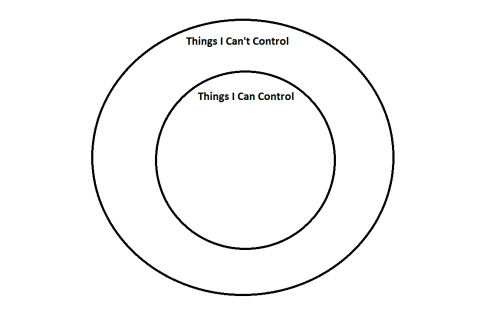
Control is something that comes up often during my sessions. Survivors have had their power taken away from them in the worst ways, and regaining control in their life can be difficult. It's even harder for teenagers, who already have little control in their lives as it is. When clients tell me how they are feeling overwhelmed due to feeling like they have little control in their lives, I have the create "Control Circles".

On a sheet of paper I have the client draw a small circle, and a bigger circle around it. In the center circle, I have them write all the things they can control (sometimes they may need help this section; if they are having difficulty, ask them if they can control what they eat, what they wear, how they handle their feelings, how they treat others, etc.). On the outside circle, I have them write things that they can't control in their lives (try to gently direct them to keep it more on an individual level of things that affect them, otherwise they may have a pretty big list of things that may not actually be currently affecting them, such as war).

Most of the time people will list more things they can control than they can't. In this case, this activity is a great tool to help them keep things in perspective. Remind them that although they may feel overwhelmed by the things they can't control, they still have more power in their life than they realize. If a person lists more things out of their control than in their control, use it as an opportunity to assist them in exploring what they could do or change to help them feel more in control (i.e. setting boundaries, time management, cooking, etc.).
I have found this to be useful for working with both teens and adults. Idea inspired from The Creative Counselor

Saturday, August 2, 2014

Termination Tree


I recently terminated with a client, and wanted to make a special ritual for our last session. I printed out a picture of a tree (or you can have the client draw or paint their own tree), and told my client that on each branch, I wanted him to write different things he's learned in counseling.

It's a great way to help your client review how far they've come, what kinds of progress they've made, and opens up for discussion any concerns or thoughts they may have.

He discussed his long-term plans for maintaining his progress. He was very thankful for all the interactive activities we did, and was so proud of himself (and he had every right to be)! It was a very touching ending to our therapeutic relationship.

You can find where I got the idea and picture from here

Saturday, July 19, 2014

Using Poetry


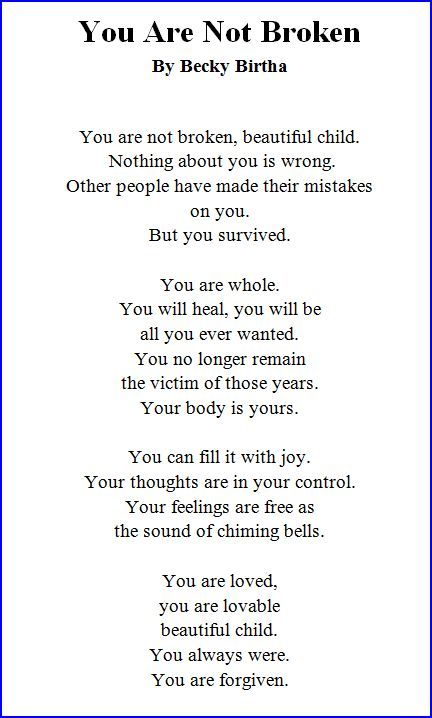
As I’ve stated before, I love poetry therapy. “Broken” by Becky Birtha, a survivor of sexual abuse, is a poem I like to use with sexual violence survivors, especially of childhood sexual abuse.
When discussing a poem with client, I first ask them their feelings about the poem and whether they enjoyed it or not. If they did, I ask them to explain to me how they feel the poem is relevant to their life or their situation. We examine the lines that really stick out to them and why they are easy to relate to.
Poems and song lyrics (especially for teenagers) can be such a powerful counseling tool. Being able to see your thoughts, situation, feelings, etc. put on paper by someone else makes you feel less alone. And sometimes it’s comforting for people to see their thoughts explained in a way that they weren’t able to.

Saturday, July 12, 2014

Life Timeline


This is an activity I love doing with clients of all ages. It's called a life timeline. On the left side of the timeline, the client inserts points with significant events that happened in their past. For example, the client might put how at 3 years old they moved to another state, 8 years old they joined a soccer team, 12 years old they tried drugs for the first time, etc. On the right side, the client inserts points with goals they have for their future. I posted an example in the second photo.
When doing this activity with adults, it allows them to reflect on how far they've come and how strong they are to be able to survive so much. When doing this activity with teens, it allows them to see that they still have a whole life ahead of them, and that they've only experienced a small bit of what life has to offer.
You can find a life timeline template here

Saturday, June 28, 2014

Trauma Masks


People experiencing trauma tend to feel one way on the inside, but display a totally different person on the outside. Trauma Masks are a great way for trauma survivors to illustrate that.
Give your client a blank mask outline. On the front side of the mask, have them illustrate how they feel others see them. On the back side of the mask, have them illustrate how they view themselves/how they feel inside. You can imagine the striking differences you’ll see!
Explore the differences on the masks together and discuss the meaning of any pictures or words they used. Try asking about the feelings they have when they look at the masks. You may get a lot more insight into the person than you ever would have expected!
 Picture from here.

Saturday, June 7, 2014

I Am Poem


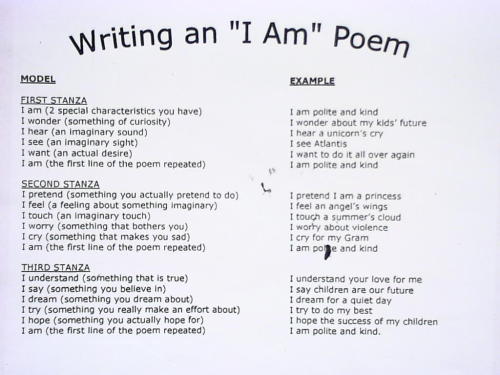
I am a big advocate for the use of poetry therapy, and have found it to be a very useful tool for counseling. This particular poetic technique is called an "I Am" poem. The poem is a fill-in-the-blank exercise, which is great for clients who don't feel confident to write a free write a poem of their own.

I have had many clients question their identity. They feel like their abuser or perpetrator has taken away their true self, and they are left feeling broken. Oftentimes survivors of sexual violence will say how they feel like they died during the sexual trauma, and they just wish they could go back to "normal".

This poem is a simple and effective tool to help clients really think about who they are. Many of my clients have learned something new about themselves when filling in the blanks, and it left them feeling excited!

Image used from here